
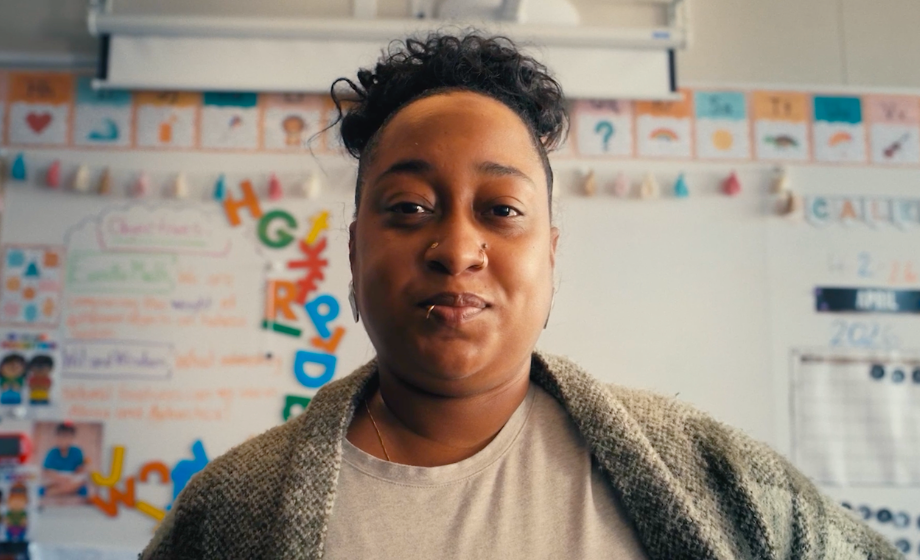
“I want to leave the same legacy that my grandmother left… she loved her job and she felt fulfilled by it.”
After dropping out of junior college, Alyssia Hewitt spent years working retail, feeling stuck and searching for purpose. But the example set by her grandmother—a beloved Berkeley school safety officer who made every child feel seen and loved—stayed with her.
With the support of a supervisor, she learned about Rivet School, an online higher education platform that offers trustworthy, accredited pathways to a bachelor’s degree.
Through Rivet School, she found a path that made it possible to balance full-time work and school, even through personal loss and setbacks.
With consistent coaching and support, she earned her bachelor’s degree in just 2.5 years, becoming the first in her family to graduate from college. She soon stepped into her own classroom as a kindergarten teacher.
Rivet School’s model is designed specifically for students like Alyssia: working adults, parents, and first-generation college students who are often left out of traditional higher education. By combining accredited online coursework with personalized coaching, flexible pacing, financial aid support, and access to critical resources like technology, emergency funds, and career guidance, Rivet School removes many of the barriers that prevent students from starting—or finishing—a degree.
Students can earn a bachelor’s degree in as little as two to three years, for a fraction of the cost, without leaving their jobs.
Rivet School shows what’s possible when college is built around real life, not the other way around. Alyssia’s journey is proof: when determination is met with the right support, it can unlock not just a degree, but a career, financial stability, and the chance to give back to the next generation.
A college degree remains one of the most effective ways to move out of poverty. Tipping Point invests in strategies that connect first-generation and low-income students to pathways to college completion. Despite serving students who face more barriers to education, 93% of high school graduates served by our grantees enrolled in college, compared with 65% across the Bay Area. 86% of enrolled students made it to college completion, compared to 74% in the state.